An MCP-Powered Repository Intelligence Agent
RepoMind: Repository Intelligence Agent using MCP and Ollama
RepoMind is a local AI-powered repository analysis agent that combines the Model Context Protocol (MCP) with Ollama-hosted Large Language Models to inspect, understand, and analyze software projects.
The system leverages MCP Filesystem tools to interact with project directories and source code while using Qwen 2.5 running locally through Ollama to reason about repository structure, code organization, and project architecture.
Unlike traditional code analysis tools, RepoMind uses natural language reasoning over real-time filesystem information to provide intelligent project understanding.
Overview
RepoMind demonstrates how MCP servers can be integrated with local LLMs to create intelligent software engineering assistants.
The project enables:
- MCP Filesystem Server Integration
- Dynamic Tool Discovery
- Tool Execution through MCP
- Repository Exploration
- Source Code Inspection
- AI-Powered Project Understanding
- Fully Local Execution with Ollama
Workflow
User Query
     │
     ▼
┌─────────────────────┐
│     Ollama/Qwen     │
└──────────┬──────────┘
           │
           ▼
┌─────────────────────┐
│    MCP Client       │
└──────────┬──────────┘
           │
           ▼
┌─────────────────────┐
│ Filesystem MCP      │
│      Server         │
└──────────┬──────────┘
           │
           ▼
   Repository Files
           │
           ▼
     Source Code
           │
           ▼
     AI Analysis
Features
MCP Filesystem Integration
Connects to the MCP Filesystem Server using standard MCP communication protocols.
Tool Discovery
Automatically discovers available filesystem tools including:
- read_file
- write_file
- edit_file
- list_directory
- directory_tree
- search_files
- get_file_info
Repository Exploration
Allows the agent to:
- Inspect project directories
- Identify source files
- Explore repository structure
Source Code Analysis
Reads source code through MCP and provides:
- File summaries
- Project understanding
- Architecture insights
- Repository-level reasoning
Local LLM Execution
Uses:
- Ollama
- Qwen 2.5
for completely local AI inference without external APIs.
Technologies Used
AI & Agents
- Ollama
- Qwen 2.5
MCP
- Model Context Protocol (MCP)
- MCP Python SDK
- MCP Filesystem Server
Development
- Python 3.10
- Jupyter Notebook
- AsyncIO
Project Structure
RepoMind/
│
├── mcp.ipynb
├── README.md
├── requirements.txt
│
└── info.png
MCP Tools Discovered
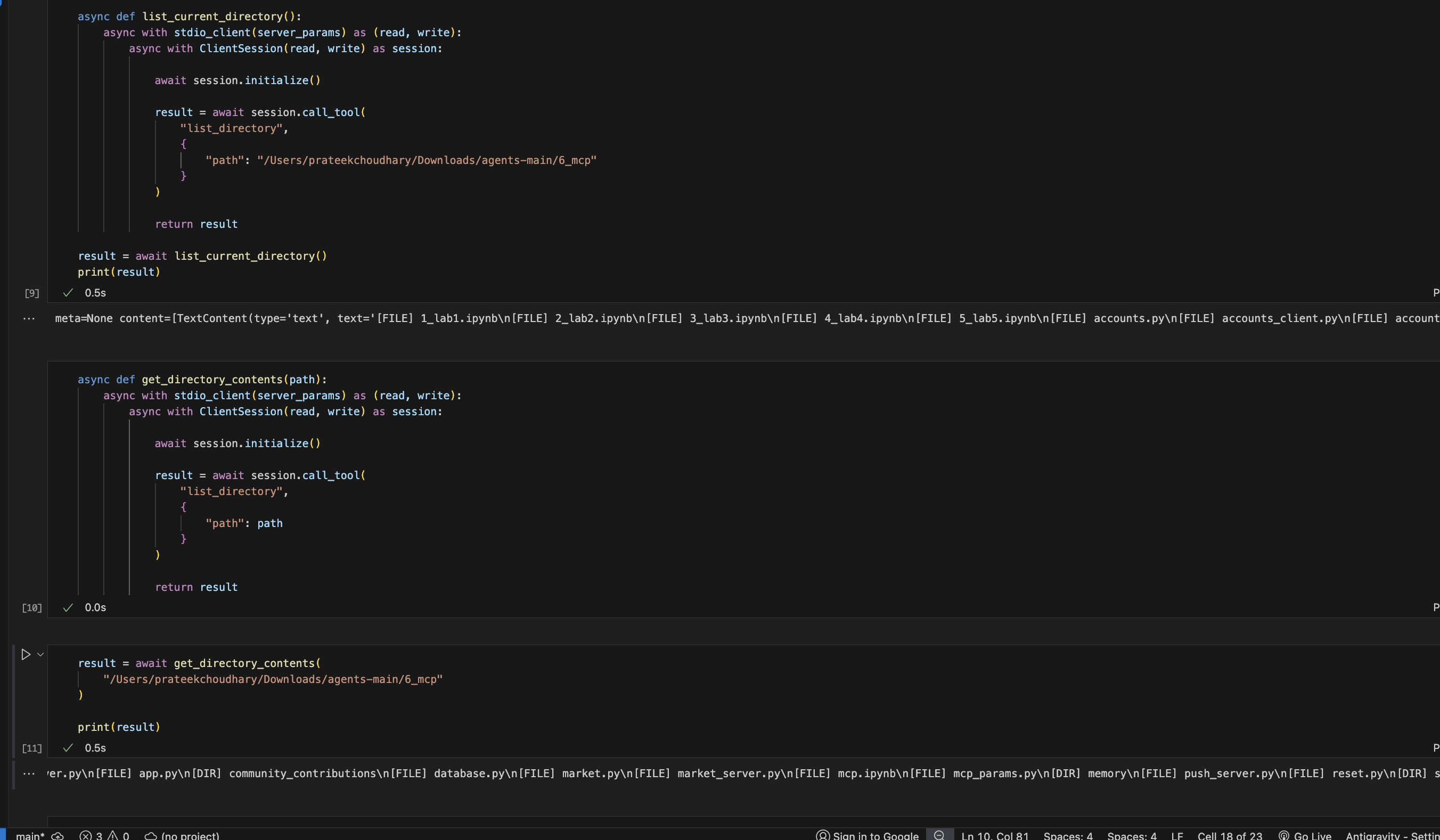
During execution, RepoMind successfully connected to the Filesystem MCP Server and discovered the following tools:
read_file
read_text_file
read_media_file
read_multiple_files
write_file
edit_file
create_directory
list_directory
list_directory_with_sizes
directory_tree
move_file
search_files
get_file_info
list_allowed_directories
Example Capabilities
Repository Inspection
The agent can:
- List project directories
- Discover Python files
- Analyze repository structure
File Reading
Using MCP tools, the agent can:
- Read source code
- Inspect project files
- Extract relevant information
Project Understanding
The agent can generate:
- Project summaries
- Architecture descriptions
- Component explanations
- Repository insights
Sample Execution
Tool Discovery
Available Tools:

- read_file
- write_file
- edit_file
- list_directory
- directory_tree
...
Repository Analysis
The project contains several Python scripts,
Jupyter notebooks, utility modules, server
components, and database-related files.

The repository appears to implement a
trading and market simulation platform.
Screenshot
MCP Workflow Execution
Key Learnings
This project provided hands-on experience with:
- Model Context Protocol (MCP)
- MCP Server Architecture
- Tool Discovery and Execution
- Local LLM Deployment
- Ollama Integration
- Agent Tool Use
- Repository Intelligence Systems
- AI-Assisted Code Understanding
Future Enhancements
Potential future improvements include:
- Automatic Repository Summarization
- Multi-File Dependency Analysis
- Codebase Documentation Generation
- Project Architecture Visualization
- Playwright MCP Integration
- Autonomous Tool Selection
- Multi-Agent MCP Workflows
Author
Prateek Choudhary
Built as an exploration of MCP-based AI agents, repository intelligence systems, and local LLM-powered software engineering workflows using Ollama and Qwen 2.5.