A Markdown-first MCP for Claude Desktop that makes AI memory portable, structured, and user-owned.
Personal Context MCP
A Markdown-first MCP for Claude Desktop that makes AI memory portable, structured, and user-owned.
personal-context-mcp helps you stop re-explaining yourself to AI across sessions, projects, and platforms.
In Action
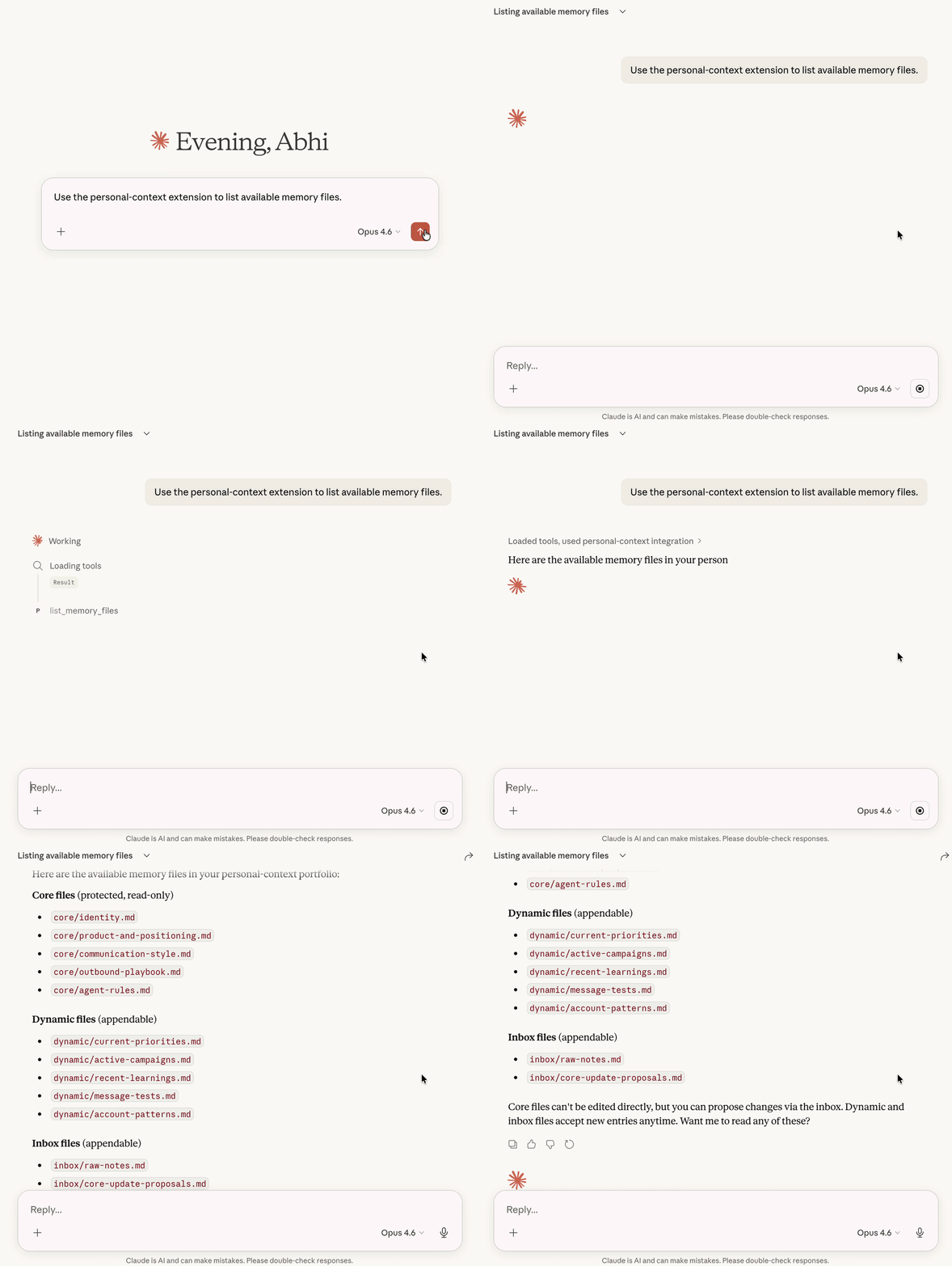
Instead of relying on opaque in-app memory, it stores context in files you control and exposes that context to Claude through an MCP extension.
Who This Is For
This is most useful if you:
- use Claude heavily
- switch between multiple AI workflows
- want continuity across sessions and projects
- want portable memory instead of product-specific memory lock-in
What Makes This Different
This project is intentionally opinionated:
- Markdown-first, so the memory layer stays portable and inspectable
core / dynamic / inbox, so durable truth, working memory, and tentative notes do not get mixed together- human-reviewable, so the important context is visible and editable in plain files
- portable across platforms, so your context is not trapped inside one AI product
The Problem
As you use more AI tools, you end up paying the same tax over and over:
- re-explaining your role
- re-explaining your projects
- re-explaining your preferences
- re-explaining your constraints
- re-explaining how you want outputs written
That repetition wastes time, lowers quality, and creates memory lock-in inside individual products.
The Model
This project uses a simple three-layer memory model:
core/Durable truth. Identity, positioning, communication style, operating rules.dynamic/Working memory. Current priorities, active campaigns, recent learnings, message tests, account patterns.inbox/Low-trust notes. Rough observations, partial ideas, and proposed core updates.
This is the key design choice.
The point is not just to “store context.”
The point is to separate stable truth from evolving memory and uncertain notes.
Why This Is Different
Many personal context systems focus on storing user data or exposing one big context object.
This project is more opinionated:
- Markdown-first, not schema-first
- modular, not monolithic
- designed for human review
- designed for ongoing memory maintenance, not just initial setup
- explicit separation between durable context, working memory, and tentative notes
What It Includes
- a Claude Desktop unpacked extension
- an MCP server built on the official MCP SDK
- a starter personal context portfolio
- a quickstart for installing and bootstrapping the system
Repo Structure
.
├── desktop-extension/personal-context/
├── mcp/
├── starter-personal-context-portfolio/
├── QUICKSTART.md
└── package.json
How It Works
Once installed, Claude can:
- list available memory files
- read a specific file
- append durable learnings to working memory
- replace selected sections in dynamic files
- bootstrap dynamic memory
- propose updates to protected core files without editing them directly
Install
See QUICKSTART.md.
Clone the repo:
git clone https://github.com/abhinavkalyan10/personal-context-mcp.git
cd personal-context-mcp
Best Use Cases
This is most useful if you:
- use Claude frequently
- switch between multiple AI workflows
- want continuity across sessions
- care about user-owned memory instead of product-owned memory
What This Is Not
This is not magical autonomous memory.
It does not replace:
- judgment
- selective curation
- periodic cleanup
- manual review of durable truth
It is a structured memory layer, not a substitute for thinking.
Suggested One-Line Description
Personal Context MCP is a portable, Markdown-based memory system for Claude Desktop that separates durable context, working memory, and low-trust notes so AI assistants can stay useful without trapping memory inside one product.
License
MIT